


We've Moved to a new location
As of Wednesday July 29th, 2026 we've moved from our 212 Highbridge Street Fayetteville NY 13066 location to our new location at 100 Intrepid ln, STE 2, Syracuse, NY 13205


Dr. James Prezzano, who has been the medical director of Fayetteville Dermatology since 2021, provides quick appointments with an average wait time of less than a week for exceptional skin care in Central New York.
Competent, Comprehensive and Compassionate Dermatologic Care


Medical Dermatology
We specialize in the diagnosis and treatment options for many medical dermatologic conditions for adults, seniors and children.
Skin Cancer
We offer a variety of treatment options for skin cancer including Mohs micrographic surgery, excision, curettage and topical chemotherapy.


Cosmetic Dermatology
We offer neurotoxin to help slow and minimize the effects of aging on the skin. We also offer laser based treatments for unwanted spots and hair.
Explore Our Services


ACNE
Acne is the most common skin condition in the U.S. — and one of the most undertreated. Clear skin and preventing scars are both realistic goals
Acne is the most common skin condition in the United States — and one of the most undertreated. At Fayetteville Dermatology, Dr. James Prezzano treats acne in teens and adults across Central New York with two goals: clear skin, and preventing the scars that untreated acne leaves behind. Both are realistic.
Why See a Dermatologist for Acne
Over-the-counter products have a ceiling, and most people who walk into our office have already hit it. Prescription treatment works at the level of what actually drives acne — clogged pores, bacteria, inflammation, and hormones. Just as important: acne scars are permanent, and they're preventable. Treating acne early and properly is the single best scar treatment there is.
How We Treat Acne at Fayetteville Dermatology
1. Topical prescriptions. The foundation for most patients: retinoids (the workhorses of acne treatment), benzoyl peroxide, topical antibiotics in smart combinations, and azelaic acid for sensitive skin or dark post-acne marks.
2. Oral antibiotics. Doxycycline and similar agents calm inflammatory acne — used as a bridge for a defined period, not a forever plan, and always alongside topicals that maintain the result.
3. Hormonal therapy. For adult women with jawline and chin breakouts that flare with cycles, spironolactone and certain combined oral contraceptives are often the missing piece.
4. Isotretinoin. For severe, nodulocystic, or scarring acne — or acne that has resisted everything else — isotretinoin (formerly Accutane) remains the most effective treatment in dermatology. It runs as a structured, monitored program: monthly visits, lab work, and strict pregnancy-prevention requirements where applicable. Dr. Prezzano will walk you through it candidly.
The Honest Timeline
Any acne regimen needs 6-12 weeks before you judge it — skin often looks unchanged or even slightly worse in the first few weeks, and that's expected, not failure. The most common reason acne treatment "doesn't work" is switching products every three weeks. We'll set the plan, then adjust it on schedule rather than on frustration.
Adult and Hormonal Acne
Acne doesn't end at 19. Adult acne — especially in women in their 20s to 40s — tends to sit on the jawline and chin and flare cyclically, and it responds well to hormonal approaches. One caveat: if your "adult acne" has no blackheads, stings with products, and comes with flushing, it may actually be rosacea — a different condition needing different treatment, and a distinction we check at every first visit.
Acne Scars
Active acne first, scars second — treating scars while breakouts continue is working against yourself. Once your skin is clear and stable, we'll discuss what's realistic for improving the scars that remain.
Why See Dr. Prezzano for Acne
We see teens and adults, appointments are typically available within a week — which matters when a teenager is starting to scar — and office visits and most prescription treatments are covered by major insurance plans. Acne is not a rite of passage to be waited out. It's a treatable medical condition.
ROSACEA
Persistent facial redness, flushing, and acne-like bumps — rosacea is common, often misdiagnosed, and very treatable
Persistent facial redness, easy flushing, visible blood vessels, acne-like bumps — rosacea is one of the most common conditions we see, one of the most misdiagnosed, and one of the most treatable. At Fayetteville Dermatology, Dr. James Prezzano builds rosacea plans around your specific pattern for patients across Central New York.
What Is Rosacea?
Rosacea is a chronic inflammatory condition of the facial skin, most common between ages 30 and 60. It shows up in four overlapping ways: background redness and flushing, visible blood vessels, papules and pustules that look like acne, and — less commonly — thickening skin (usually on the nose) or eye involvement (gritty, red, irritated eyes). Most patients have a mix, and the mix determines the treatment.
Common Triggers
Rosacea-prone skin overreacts to things that dilate blood vessels. The usual suspects: sun (the biggest one), heat and hot showers, exercise, alcohol — especially red wine — spicy food, hot drinks, stress, and wind and cold, which Central New York winters supply generously. You don't need to avoid everything; a few weeks of noting what precedes your flares usually identifies your personal top three.
Rosacea or Adult Acne?
If your "adult acne" has no blackheads, stings when you apply products, and comes with flushing or constant redness — it may well be rosacea. The distinction matters because typical acne treatments often irritate rosacea and make it worse. Getting the diagnosis right is the whole ballgame.
How We Treat Rosacea at Fayetteville Dermatology
1. Skincare foundation. Gentle, fragrance-free cleanser, moisturizer, and daily broad-spectrum sunscreen — non-negotiable, and we'll recommend specific products that rosacea skin tolerates.
2. Topical prescriptions. Metronidazole, ivermectin, or azelaic acid for the bumps and inflammation, chosen for your skin's sensitivity.
3. Oral treatment. Low-dose doxycycline — used at an anti-inflammatory dose rather than a full antibiotic dose — for moderate papulopustular rosacea.
4. Redness-specific options. Topicals like brimonidine can reduce background redness temporarily; fixed visible vessels respond best to vascular laser or IPL, which we'll discuss honestly if that's your main concern — including what's realistic and what insurance won't cover.
5. Eye involvement. Ocular rosacea gets lid-care routines and, when needed, coordination with your eye doctor.
What to Expect
Bumps and inflammation usually improve within 4-8 weeks of starting treatment. Background redness is slower and needs different tools — we'll set expectations honestly rather than promise a uniform result. Rosacea is controlled, not cured: the goal is calm skin as your default, with flares that are rare, short, and manageable.
Why See Dr. Prezzano for Rosacea
An accurate diagnosis first — rosacea, acne, and other look-alikes each need different treatment — then a plan matched to your pattern and skin sensitivity, adjusted until it works. Appointments are typically available within a week.
PSORIASIS
Psoriasis is a chronic immune-driven skin condition — and one where modern treatment has changed what patients can expect
Psoriasis is a chronic immune-driven skin condition affecting roughly 2-3% of adults — and one where modern treatment has genuinely changed what patients can expect. At Fayetteville Dermatology, Dr. James Prezzano treats psoriasis across the full range of severity for patients in Central New York, from a few stubborn plaques to widespread disease. Psoriasis is listed among his clinical areas of expertise, and treatment plans run from simple topicals to the newest biologic therapies.
What Is Psoriasis?
In psoriasis, the immune system signals skin cells to grow much faster than normal. Skin that should renew over a month renews in days, piling up into thickened, scaly, sharply-bordered plaques — most often on the elbows, knees, scalp, and lower back, though nails and skin folds are common too. It's not contagious and not a hygiene issue. Genetics load the gun; triggers like strep infections, stress, certain medications, skin injury, and dry winters (very familiar in Central New York) pull the trigger.
Types We Treat
- Plaque psoriasis — the classic form, 8-9 of every 10 cases
- Guttate — small drop-like spots, often after strep, common in younger patients
- Inverse — smooth red patches in skin folds
- Nail psoriasis — pitting, thickening, lifting nails
- Pustular and other less common forms
More Than Skin Deep
Up to 1 in 3 people with psoriasis develop psoriatic arthritis — joint stiffness, swelling, or morning aching that deserves early attention, because early treatment protects joints. Psoriasis is also associated with cardiovascular and metabolic health risks, which is why Dr. Prezzano treats it as a whole-person condition, not just a skin rash, and coordinates with your primary care physician or rheumatology when needed.
How We Treat Psoriasis at Fayetteville Dermatology
1. Topicals. For limited disease: corticosteroids, vitamin D analogs, and modern combination preparations — chosen by body site, since scalp, face, and skin folds each need different strengths and vehicles.
2. Phototherapy. Narrowband UVB is a well-established option for more widespread disease.
3. Oral systemics. Methotrexate and apremilast remain useful for the right patients.
4. Biologics. For moderate-to-severe psoriasis, biologic therapies targeting IL-17, IL-23, and TNF have transformed outcomes — many patients now achieve clear or almost-clear skin. They require screening and periodic monitoring, and our office handles the prior authorization paperwork with your insurance.
The right choice depends on severity, body sites involved, joint involvement, your other health conditions, and your preferences — there is no one-size-fits-all psoriasis plan.
Psoriasis or Eczema?
The two are often confused, and the treatments differ. Psoriasis plaques tend to be thicker, scalier, and more sharply bordered than eczema. If you've been treating one without results, it's worth a fresh look — confirming the diagnosis is step one of every first visit.
Why See Dr. Prezzano for Psoriasis
Dr. Prezzano is a board-certified dermatologist and Fellow of the American Academy of Dermatology with particular expertise in psoriasis and experience across the modern biologic landscape. Appointments are typically available within a week — which matters when you're flaring.
LIPOMA REMOVAL
A lipoma is a benign fatty lump under the skin — usually harmless, but worth removing when it grows, aches, or bothers you
A lipoma is a benign fatty lump under the skin — usually harmless, but worth removing when it grows, aches, restricts movement, or simply bothers you. At Fayetteville Dermatology, Dr. James Prezzano removes lipomas under local anesthetic in a single office visit, with every specimen confirmed by pathology.
What Is a Lipoma?
A lipoma is a slow-growing collection of fat cells that forms a soft, rubbery, movable lump under the skin — most often on the trunk, shoulders, neck, arms, or thighs. They're most common between ages 40 and 60, usually painless, and benign. Some people develop several; multiple lipomas can run in families.
Lipoma, Cyst, or Something Else?
A cyst tends to sit closer to the surface, feel firmer, and often shows a small central opening; a lipoma sits deeper and feels soft and doughy. More important are the features that deserve a closer look before removal: rapid growth, firmness, pain, or a lump that feels fixed or unusually deep. Truly concerning fatty tumors are rare, but they exist — which is why lumps with those features may get imaging first, and why every removed lipoma goes to pathology.
When to Remove a Lipoma
- It's growing, or large enough to be visible
- It aches or is tender when pressed or leaned on
- It interferes with movement, clothing, or seatbelts
- You'd like certainty about the diagnosis
How Lipoma Removal Works
Removal is done under local anesthetic in our Fayetteville office and usually takes 30-45 minutes. Dr. Prezzano makes a small incision — typically shorter than the lipoma itself — frees the lipoma from the surrounding tissue, and removes it whole. The site is closed with sutures placed for the neatest possible line, and the tissue goes to pathology. Sutures come out in 1-2 weeks depending on location.
One honest caveat: very large or unusually deep lipomas, or those near important structures, may need imaging first — and occasionally are better handled in a surgical facility. If that's your situation, Dr. Prezzano will tell you plainly and point you in the right direction rather than force a poor fit.
Aftercare and Healing
- Days 1-2: Keep the site covered and dry; minor soreness is normal.
- Until healed: Gentle cleansing, petrolatum, fresh bandage daily.
- 1-2 weeks: Sutures removed. Most patients return to normal activity the next day, avoiding heavy strain on the area for about 2 weeks.
- Scarring: a thin line that fades considerably over the first 6 months.
Why Fayetteville Dermatology for Lipoma Removal
An expert exam before anything is removed, surgical technique from a fellowship-trained Mohs surgeon whose daily work is precise excisions and closures, and pathology on every specimen. Appointments are typically available within a week.
CYST REMOVAL
A cyst that keeps growing, gets tender, or keeps coming back can be removed — sac and all — in a single office visit
A cyst that keeps growing, gets tender, ruptures, or simply bothers you doesn't have to stay. At Fayetteville Dermatology, Dr. James Prezzano removes cysts in a single office visit under local anesthetic — taking the entire sac, not just the contents, so the cyst doesn't come back. Every removed cyst is examined by pathology.
What Is a Skin Cyst?
Most skin cysts are epidermoid cysts (often called "sebaceous cysts") — a small sac under the skin that slowly fills with keratin, the soft protein your skin naturally produces. You'll often see a tiny central opening (a punctum) on the surface. Pilar cysts are a similar variety common on the scalp. Both are benign, and both tend to grow slowly over months to years.
Not sure whether your lump is a cyst? A soft, movable lump deeper under the skin may be a lipoma instead — the exam at your visit settles it.
When Removal Makes Sense
- The cyst is growing or has become noticeable
- It's had episodes of tenderness, redness, or swelling
- It has ruptured or been infected before — these tend to recur
- It catches on clothing, combs, or razors, or sits somewhere visible
- The diagnosis is uncertain and tissue confirmation is worthwhile
Why You Shouldn't Squeeze or Drain It Yourself
Squeezing a cyst pushes irritating contents into the surrounding tissue, which causes inflammation and sometimes infection — and because the sac stays behind, the cyst refills. A previously ruptured cyst also becomes harder to remove cleanly later. If it's bothering you, have it evaluated instead.
How We Remove Cysts
Cyst removal is done under local anesthetic in our Fayetteville office; the appointment usually takes 20-30 minutes. Dr. Prezzano removes the cyst intact through a small incision planned along the skin's natural lines, closes with sutures, and sends the tissue for pathology examination. Sutures come out in 1-2 weeks depending on the location.
One honest caveat: an acutely inflamed or infected cyst usually shouldn't be excised on the spot. It's typically calmed first — drainage, a steroid injection, or occasionally antibiotics — then removed a few weeks later once quiet. That two-step approach gives a smaller scar and a lower chance of recurrence.
Aftercare and Healing
- Days 1-2: Keep the site covered and dry.
- Until healed: Gentle daily cleansing, petrolatum, fresh bandage.
- 1-2 weeks: Sutures removed (or dissolve, depending on type used).
- Ongoing: Protect the site from sun for 2-3 months.
Spreading redness, increasing pain, or drainage? Call us at (315) 637-9116.
Why Fayetteville Dermatology for Cyst Removal
Three reasons: whole-sac technique so removals stay removed; closures planned by a fellowship-trained Mohs surgeon whose daily work is precise excisions and cosmetic repairs; and pathology on every specimen, so you get an answer, not just a procedure. Appointments are typically available within a week.
MOLE CHECK
A full-body skin exam is the fastest way to catch skin cancer early — when treatment is simplest and cure rates are highest
A full-body skin exam is the fastest way to catch skin cancer early — when treatment is simplest and cure rates are highest. At Fayetteville Dermatology, screenings are performed personally by Dr. James Prezzano, a board-certified dermatologist and fellowship-trained Mohs surgeon. That matters: the person examining your skin is the same specialist who diagnoses and surgically treats skin cancer every working day.
What Happens During a Full-Body Skin Exam
The exam takes about 10-20 minutes. You'll change into a gown, and Dr. Prezzano will systematically examine your skin from scalp to soles — including easy-to-miss areas like the scalp, behind the ears, between fingers and toes, and under nails. He uses dermoscopy, a polarized magnifying lens, to evaluate pigment and blood vessel patterns beneath the surface that aren't visible to the naked eye.
This is also your time: point out anything new, changing, itching, or bleeding, and anything that simply worries you. No spot is too small to mention.
Who Should Be Screened — and How Often
For most adults, a skin exam once a year is a sensible baseline. Dr. Prezzano may recommend every 6-12 months if you have:
- A previous skin cancer — roughly 4 in 10 patients develop a second one within five years
- A family history of melanoma
- Many moles (50+) or moles that look atypical
- Fair skin, a history of sunburns, or tanning bed use
- A weakened immune system (organ transplant, certain medications)
- An outdoor job or lifestyle — common across Central New York's farming, construction, and lake communities
What We Look For
Melanoma warning signs follow the ABCDE rule: Asymmetry, irregular Borders, uneven Colors, Diameter over 6mm, and Evolving spots. Just as important are the signs of the more common non-melanoma cancers: pearly bumps, sores that don't heal or that heal and reopen, and rough, scaly patches that keep coming back in sun-exposed spots.
If you'd like a specific mole evaluated — or removed — that can usually happen in the same visit. See our mole removal page for how that works.
If We Find Something Suspicious
A suspicious spot is biopsied during the same visit, under local anesthetic — it adds just a few minutes. The sample goes to pathology, results are usually back within 1-2 weeks, and we contact you either way.
If a biopsy does come back as skin cancer, you're already in the right place: Dr. Prezzano performs both standard excisions and Mohs micrographic surgery on-site, and treatment is typically scheduled within 1-2 weeks. No referral to a separate surgical practice, no starting over with a new doctor.
Why Have Your Skin Checked by a Mohs Surgeon
Screening is pattern recognition, and Dr. Prezzano's daily work — diagnosing, operating on, and studying skin cancer, including published research on squamous cell carcinoma grading — keeps that pattern recognition sharp. He is board-certified in both Dermatology and Micrographic Dermatologic Surgery, and appointments are typically available within a week.
If it's been more than a year since someone looked at your skin — or no one ever has — this is one of the easiest, highest-value appointments in medicine.
MOLE REMOVAL
Most moles are harmless — but moles that change, itch, bleed, or simply bother you can be safely removed in a single office visit
Most moles are completely harmless — but a mole that changes, itches, bleeds, catches on clothing, or simply bothers you doesn't have to stay. At Fayetteville Dermatology, Dr. James Prezzano — a board-certified dermatologist and fellowship-trained Mohs surgeon — removes moles in a single office visit, with every removed mole examined by pathology. Patients across Central New York come to us for removals that are safe, quick, and cosmetically thoughtful.
What Is a Mole?
A mole (nevus) is a cluster of pigment cells in the skin. Most adults have between 10 and 40 of them, and the vast majority never cause a problem. Moles can be flat or raised, smooth or rough, and range from pink to dark brown. New moles commonly appear through your 30s; a brand-new dark spot later in adulthood deserves a look before anything else.
Medical vs. Cosmetic Mole Removal
Medical removal is recommended when a mole shows features that could indicate skin cancer — change in size, shape, or color, irregular borders, itching, or bleeding. In these cases the mole is removed and sent for pathology, and the visit is typically covered by insurance.
Cosmetic removal is for moles that are benign but bothersome — a raised mole that catches on a razor, collar, or bra strap, or one in a spot you'd simply rather not have it. Insurance generally doesn't cover cosmetic removal, but it's a quick, affordable office procedure and we'll quote you the cost up front — no surprises.
When a Mole Should Be Checked First
Before removing any mole, Dr. Prezzano examines it — often with dermoscopy, a polarized lens that shows pigment structure beneath the surface. Get a mole checked promptly if you notice:
- Asymmetry — one half doesn't match the other
- Border irregularity — ragged or blurred edges
- Color variation — multiple shades within one mole
- Diameter — larger than a pencil eraser (6mm)
- Evolving — any change in size, shape, color, or symptoms
This matters because a suspicious mole should be removed the right way — with technique and margins chosen to give pathology the clearest possible answer. It's one of the reasons we recommend never using at-home mole removal kits or having moles lasered off without a biopsy: both can destroy the tissue needed to detect a melanoma.
How We Remove Moles
Mole removal is done under local anesthetic in our Fayetteville office. The appointment usually takes 20-30 minutes, and the removal itself just a few minutes. Depending on the mole, Dr. Prezzano will use one of two techniques:
- Shave removal — the mole is shaved level with the surrounding skin. No sutures needed; the small wound heals over 1-2 weeks. Best for raised, benign-appearing moles.
- Surgical excision — the full depth of the mole is removed and the site closed with sutures. Used for flat moles, deeper moles, and anything suspicious. Sutures come out in 1-2 weeks depending on the location.
Every mole we remove is sent for pathology examination — even the clearly benign-looking ones. Results are usually back within 1-2 weeks, and we contact you either way.
Will It Leave a Scar? An Honest Answer
Any time skin is cut, some mark remains — anyone who promises "scar-free" removal is overselling. What we can honestly say: scars from mole removal are usually small, flat, and fade considerably over the first 6 months. Dr. Prezzano's fellowship training in Mohs surgery includes advanced reconstruction and cosmetic closure techniques, and he plans every removal — orientation, depth, closure — with the final appearance in mind. If a scar heals more noticeably than expected, there are quick in office procedures to improve the appearance.
Aftercare and Healing
- Days 1-2: Keep the site covered and dry. Minor tenderness is normal.
- Until healed: Gentle daily cleansing, petrolatum, and a fresh bandage. This simple routine beats antibiotic ointments for most people.
- 1-2 weeks: Shave sites heal over; excision sutures are removed (or dissolve, depending on type used).
- Ongoing: Protect the healing site from sun for 2-3 months — a new scar tans darker and stays that way.
If you notice spreading redness, increasing pain, or drainage, call us at (315) 637-9116.
Why Have Your Mole Removed at Fayetteville Dermatology
Three reasons patients choose us: every removal includes an expert evaluation first, so nothing suspicious gets removed the wrong way; every specimen goes to pathology, so you get an answer, not just a removal; and the procedure is performed by a fellowship-trained Mohs surgeon whose daily work is precise removals and cosmetic closures on the face. Appointments are typically available within a week.
SKIN CANCER
Skin cancer is the most common cancer in the United States — and when caught early, one of the most curable
Skin cancer is the most common cancer in the United States — about 1 in 5 Americans will develop one by age 70. Caught early, it is also among the most curable. At Fayetteville Dermatology, Dr. James Prezzano — a board-certified dermatologist and fellowship-trained Mohs surgeon — handles the full journey in one office: skin checks, biopsy, diagnosis, and surgical treatment for patients across Central New York.
The Main Types of Skin Cancer
Basal cell carcinoma (BCC) is the most common type, making up roughly 8 in 10 skin cancers. It typically appears as a pearly bump, a pink patch, or a sore that heals and reopens — most often on the face, ears, scalp, and neck. BCC grows slowly and very rarely spreads, but it does keep growing locally and can become destructive if ignored.
Squamous cell carcinoma (SCC) is the second most common type. It often looks like a rough, scaly, or crusted bump that may be tender or bleed. Unlike BCC, SCC can spread to lymph nodes if left untreated for a long time — which is why timely treatment matters. Dr. Prezzano has co-authored peer-reviewed research on how Mohs surgeons grade squamous cell carcinoma.
Melanoma is less common but the most serious type, because it can spread early. It usually appears as a new dark spot or a changing mole. Found early, melanoma is highly treatable — which is why regular skin checks and prompt evaluation of changing moles are so important.
Actinic keratoses (AKs) are precancerous rough, scaly patches caused by sun damage. A small percentage progress to squamous cell carcinoma over time, so we treat them before that can happen.
Warning Signs: When to Get a Spot Checked
Have a spot evaluated if you notice any of the following:
- A sore or pimple-like bump that doesn't heal within 3-4 weeks, or heals and reopens
- A spot that bleeds, itches, crusts, or becomes tender without a clear cause
- A new dark spot appearing in adulthood, or a mole that is changing
- The ABCDEs of melanoma: Asymmetry, irregular Borders, uneven or multiple Colors, Diameter larger than a pencil eraser, and Evolving size, shape, or color
- A rough, scaly patch that keeps coming back in the same sun-exposed spot
Most spots people worry about turn out to be benign — but the only way to know is to have it examined. A quick look is always better than waiting.
How We Diagnose Skin Cancer
Diagnosis starts with a focused exam of the spot in question (or a full-body skin exam if you're due for one). Dr. Prezzano uses dermoscopy — a polarized magnifying lens — to evaluate structures beneath the skin surface that aren't visible to the naked eye.
If a spot looks suspicious, a small biopsy is taken during the same visit, under local anesthetic. The sample is examined by pathology, and results are usually back within 1-2 weeks. We contact you with the result either way — you won't be left wondering.
Skin Cancer Treatment Options at Fayetteville Dermatology
The right treatment depends on the type of cancer, its size and location, how aggressive it appears under the microscope, and your overall health. Options include:
- Mohs micrographic surgery — the gold standard for skin cancers on the face, head, neck, and other cosmetically sensitive areas, with a cure rate of approximately 99% for previously untreated BCC and SCC. Dr. Prezzano performs Mohs on-site, including same-day reconstruction.
- Surgical excision — removal of the cancer with a margin of healthy skin, usually the right choice for cancers on the trunk, arms, and legs. Performed in-office under local anesthetic.
- Electrodesiccation and curettage (ED&C) — scraping and cauterizing, appropriate for certain small, low-risk BCCs and SCCs.
- Topical treatments — prescription creams (5-fluorouracil, imiquimod) for superficial cancers and actinic keratoses.
- Cryotherapy — freezing, used mainly for actinic keratoses.
Dr. Prezzano will walk you through why a particular option fits your situation — including when a simpler, less expensive treatment is the better choice.
Why Patients Choose Dr. Prezzano for Skin Cancer Care
Dr. James Prezzano is board-certified in both Dermatology and Micrographic Dermatologic Surgery and completed his residency and fellowship at the University of Rochester Medical Center. He has co-authored peer-reviewed research on squamous cell carcinoma grading among Mohs surgeons.
What that means in practice: the doctor who examines your spot is the same one who biopsies it, interprets the findings with pathology, performs the surgery, and does the reconstruction. There is no handoff between a screening clinic, a surgical center, and a plastic surgeon — and appointments are typically available within a week.
After Treatment: Follow-Up and Prevention
Once you've had one skin cancer, your risk of developing another is meaningfully higher — roughly 4 in 10 patients develop a second one within five years. We'll set a surveillance schedule that fits your history, typically a full-body skin exam every 6-12 months.
Day to day, prevention is simple and worth doing: broad-spectrum SPF 30+ on exposed skin (including ears and scalp), reapplied when outdoors for long stretches, plus hats and shade during peak hours. Central New York summers on the lake count just as much as beach vacations.
ECZEMA
Eczema is a long-term skin condition where the skin's protective barrier doesn't work the way it should
Eczema — also called atopic dermatitis — is a chronic inflammatory skin condition that affects roughly 10% of adults and 20% of children in the U.S. At Fayetteville Dermatology, Dr. James Prezzano provides expert eczema care for patients across Central New York. Dr. Prezzano has co-authored peer-reviewed research on treatment-resistant atopic dermatitis and the use of newer biologic therapies, bringing a deep understanding of the condition to every appointment.
What Is Eczema?
Eczema is a long-term skin condition where the skin's protective barrier doesn't work the way it should. This causes the skin to lose moisture, become inflamed, and react more strongly to triggers like soap, detergents, allergens, stress, or weather changes. The most common form is atopic dermatitis — usually beginning in childhood and often appearing alongside asthma or allergies.
Eczema is not contagious. It is not caused by poor hygiene. It is influenced by genetics, immune system function, and environmental factors — and while there's no permanent cure, the right treatment plan can keep flares mild and infrequent for the majority of patients.
Signs and Symptoms
Eczema can look different depending on age, skin tone, and severity. The most common signs include:
- Dry, scaly skin that worsens in winter
- Intense itching, often worse at night
- Red or pink patches on lighter skin; purple, brown, or grayish patches on darker skin
- Cracked, weepy, or crusty areas during flares
- Thickened, leathery skin in chronically affected areas (lichenification)
- Common locations: behind the knees, inside the elbows, neck, hands, face, and scalp (in infants)
Severe or persistent eczema can disrupt sleep, focus, mood, and quality of life — and is often underestimated by people who haven't experienced it.
Common Eczema Triggers
Identifying and avoiding personal triggers is a core part of long-term eczema management. Common ones include:
- Harsh soaps, fragrances, and detergents
- Hot, long showers and dry winter air (a common issue in Central New York winters)
- Wool, synthetic fabrics, and rough textures
- Sweat and overheating
- Stress and lack of sleep
- Food allergies (in some children)
- Dust mites, pollen, pet dander
- Skin infections (often Staph aureus)
Treatment Options at Fayetteville Dermatology
There is no one-size-fits-all eczema plan. Dr. Prezzano will examine your skin, review your history, and build a treatment strategy matched to your severity, lifestyle, and previous response to therapy.
1. Skincare foundation. Every plan starts here: gentle, fragrance-free cleansers, daily thick moisturizers, and lukewarm (not hot) showers. We'll recommend specific products by name for your skin type.
2. Topical medications. For mild-to-moderate eczema:
- Topical corticosteroids — the gold standard for flares (used short-term and at the right strength for the right body part)
- Topical calcineurin inhibitors (tacrolimus, pimecrolimus) — useful on the face and other delicate areas
- Topical PDE-4 inhibitors (crisaborole) and JAK inhibitors (ruxolitinib) — newer non-steroid options
3. Phototherapy. Narrowband UVB light therapy can dramatically improve moderate-to-severe eczema for patients who haven't responded fully to topicals.
4. Systemic and biologic therapy. For moderate-to-severe eczema that hasn't responded to topicals or phototherapy, newer treatments have transformed outcomes:
- Dupilumab (Dupixent) — a biologic injection that blocks the immune signals driving eczema. Dr. Prezzano has co-authored published research on dupilumab for treatment-resistant atopic dermatitis.
- Tralokinumab, lebrikizumab — newer biologics for similar use cases
- Oral JAK inhibitors (upadacitinib, abrocitinib) — pill-form options
5. Trigger management & education. A treatment plan is only as good as the day-to-day routine. We'll spend time on what to avoid, when to escalate, and how to recognize a flare early.
Eczema in Children and Adults
We treat both. Pediatric eczema typically appears on the cheeks, scalp, and outer arms/legs in infants, then shifts to the inner elbows and behind the knees as children grow. Most kids see significant improvement by school age, though some carry it into adulthood.
Adult eczema often shows up on the hands (especially in healthcare workers, hairdressers, and food service workers), eyelids, neck, and face. Adult-onset eczema is also possible — even in patients with no childhood history.
For very young children, we always prioritize safe topicals and the most conservative effective approach, escalating only when needed.
Why See Dr. Prezzano for Eczema
Three things set Fayetteville Dermatology apart for eczema care:
- Research-backed expertise. Dr. Prezzano has co-authored peer-reviewed publications on treatment-resistant atopic dermatitis and the use of dupilumab — meaning he is intimately familiar with the patients who haven't responded to conventional treatment.
- All ages welcome. We see infants, children, teens, and adults. You don't have to bounce between providers as your child grows or your needs change.
- Quick access. Our average wait time for an appointment is less than one week — important when you're in the middle of a flare.
Dr. Prezzano is a Fellow of the American Academy of Dermatology (FAAD) and is board-certified in both Dermatology and Micrographic Dermatologic Surgery.
Eczema, Psoriasis, or Something Else?
Conditions like psoriasis and rosacea are commonly mistaken for eczema — and each needs different treatment. Confirming the diagnosis is part of every first visit, especially if what you've tried so far hasn't worked.
MOHS SURGERY
Mohs micrographic surgery is the most precise and effective treatment available for most skin cancers on the face, head, neck, and other cosmetically sensitive areas
Mohs micrographic surgery is the most precise and effective treatment available for most skin cancers on the face, head, neck, and other cosmetically sensitive areas. At Fayetteville Dermatology, Dr. James Prezzano — a board-certified Mohs surgeon — performs the entire procedure on-site, from removal to microscopic analysis to reconstruction, in a single visit. Patients across Central New York choose Mohs when they need the highest cure rate possible while preserving as much healthy skin as possible.
What Is Mohs Surgery?
Mohs surgery (sometimes called Mohs micrographic surgery, MMS, or simply "Mohs") is a specialized technique for removing skin cancer one thin layer at a time. After each layer is removed, your surgeon examines 100% of its margins under a microscope before deciding whether more tissue needs to be taken. This is fundamentally different from a standard excision, where the tissue is sent off-site to a lab and only sampled — meaning small pockets of cancer cells can be missed.
The result: Mohs offers the highest documented cure rate of any skin cancer treatment — approximately 99% for previously untreated basal cell and squamous cell carcinomas, according to the American College of Mohs Surgery. It also removes the smallest amount of healthy tissue possible, which matters greatly when the cancer is on the nose, eyelid, ear, lip, or hands.
When Mohs Surgery Is the Right Choice
Mohs is most often recommended when:
- The skin cancer is on the face, head, neck, hands, feet, or genitals (areas where every millimeter of healthy tissue matters)
- The cancer is large, recurrent, or has unclear borders
- The cancer is aggressive or growing quickly
- Standard excision has been attempted and the cancer returned
- The patient is immunosuppressed (transplant recipients, certain medications)
- The cancer is in an area where scarring would be highly visible
For small, low-risk basal cell carcinomas on the trunk or limbs, a standard excision or curettage is often appropriate and less expensive. Dr. Prezzano will discuss the right option for your specific case at your consultation.
What to Expect on the Day of Your Mohs Procedure
Mohs is performed under local anesthesia in our Fayetteville office. Most patients are awake and comfortable throughout. Plan to be at the office for 1.5-4 hours — most patients are done in about 2 hours. Most of this time is waiting for tissue analysis, which is why we recommend bringing a book, tablet, or someone to keep you company. The actual surgical time is typically around 10 minutes per layer.
Here's the typical sequence:
- Prep & local anesthesia. The area is cleaned and numbed.
- First layer removed. Dr. Prezzano excises a thin layer of tissue including the visible cancer.
- Microscopic analysis. The tissue is processed and examined on-site. You wait comfortably in the office during this step.
- Repeat if needed. If cancer cells remain, only the affected area is removed. This is repeated until margins are clear.
- Reconstruction. Once the cancer is fully removed, Dr. Prezzano closes the wound — often with a custom flap or graft designed to preserve appearance and function.
You'll go home the same day. Most patients return to work within 2-7 days depending on the location and complexity of the closure.
Why Patients Choose Dr. Prezzano for Mohs in Central New York
Dr. James Prezzano is board-certified in both Dermatology and Micrographic Dermatologic Surgery. He completed his dermatology residency and fellowship at the University of Rochester Medical Center and has been performing Mohs surgery and complex reconstructions throughout his career.
He has co-authored peer-reviewed research on squamous cell carcinoma grading among Mohs surgeons, contributing to how the field standardizes diagnosis. He is a Fellow of the American Academy of Dermatology (FAAD) and a member of the American College of Mohs Surgery.
What this means for you: the same surgeon who removes the cancer is the one analyzing the tissue and reconstructing the wound. There's no handoff, no shipping tissue to a separate lab, and no waiting weeks for results.
Recovery and Aftercare
You'll leave the office with a pressure bandage and detailed written aftercare instructions (we also provide post-procedure care guides for reference at home). Typical recovery looks like:
- Days 1-2: Keep the bandage dry and in place. Some swelling and minor bleeding is normal.
- Days 2-14: Follow daily wound care (gentle cleansing, petrolatum, fresh dressing).
- 1-2 weeks: Sutures removed (or self-dissolve, depending on type used).
- 6-12 weeks: Most Mohs scars fade significantly during this period, with the scar continuing to improve over the first 6 months. If the scar remains obvious, there are quick in office procedures to improve the appearance.
If you ever notice increased pain, warmth, pus-like drainage, fever, or bleeding that doesn't stop with 20 minutes of firm pressure — call our office immediately at (315) 637-9116.
James Prezzano, M.D.
He graduated cum laude from the University of Florida with his bachelor’s in chemistry and biochemistry, and was inducted into the Phi Beta Kappa Honor Society.
He went on to receive his Doctor of Medicine (MD) from SUNY Upstate Medical University, where he was elected into the Alpha Omega Alpha (AOA) national honor society, reserved for the top 10% of graduating medical students.
He completed his transitional year internship at Bassett Medical Center, affiliated with Columbia University, in Cooperstown, NY. Dr. Prezzano spent five years in dermatology specific post graduate training. He spent two years in a dermatology fellowship, at the forefront of medical and surgical dermatologic clinical trials and research. He completed his dermatology residency at the University of Rochester.
He has published numerous articles in peer-reviewed journals on topics of surgical, medical, and cosmetic dermatology. He has also presented nationally and internationally, receiving multiple awards for his research.
Dr. Prezzano is a fellow of the American Association of Dermatology (FAAD) and is a board certified dermatologist as well as a board certified Mohs micrographic surgeon.
Dr. Prezzano brings his expertise and passion for patient-centered dermatologic care to Syracuse and the Central New York region.
In his free time, Dr. Prezzano enjoys spending quality time with his wife and two small children, as well as exploring the local parks and the occasional round of golf.


Katharine Shields, NP
She graduated magna cum laude and as valedictorian from Upstate Medical University with her Bachelor of Science in Nursing. There she was inducted into the Sigma Theta Tau Nursing Honor Society.
She then went on to receive her Master of Science, Nurse Practitioner degree from Upstate Medical University, graduating summa cum laude.
Prior to becoming a Nurse Practitioner Katie worked in both the adult and pediatric intensive care units at Upstate as a Registered Nurse.
Katie has spent the last several years as a dermatology nurse practitioner in a busy, local dermatology practice prior to joining Fayetteville Dermatology in the fall of 2022.
Katie enjoys treating a variety of dermatologic conditions in patients of all ages. She is board certified through the American Association of Nurse Practitioners.
In her free time Katie enjoys spending time with her family and friends, attending local sporting events and relaxing with a good book.
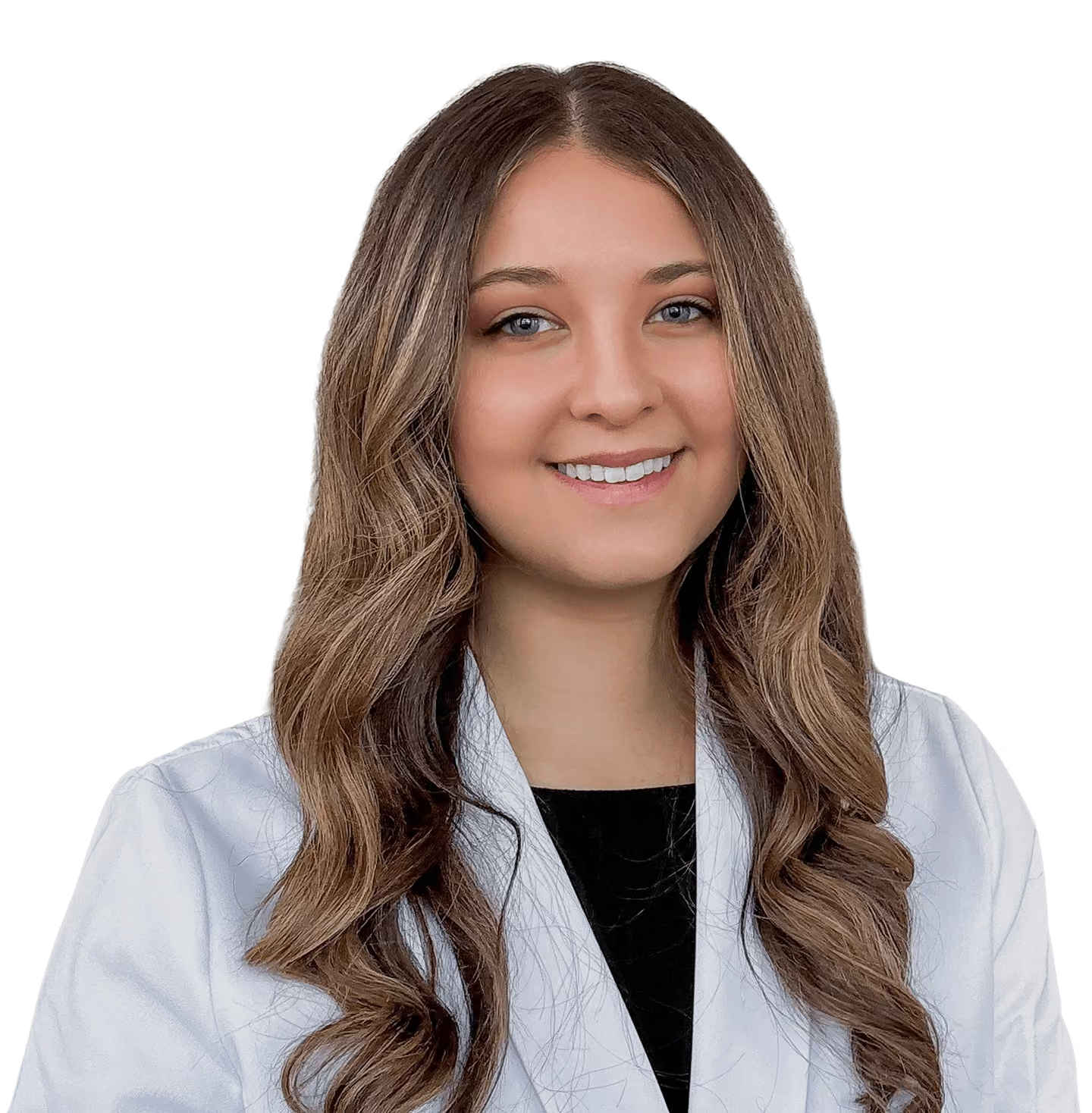
Abigail Hunt Dugo
Is a board-certified Physician Assistant dedicated to providing compassionate, evidence-based dermatologic care to patients of all ages. She earned her Bachelor in Health Sciences and Master of Physician Assistant Studies from Duquesne University.
She completed a highly selective intensive dermatology fellowship in Rochester where she received advanced education in diagnosing and managing a broad spectrum of skin diseases and performing dermatologic procedures.
She has experience in both dermatology and psychiatry, giving her a unique perspective on treating the whole person and understanding the impact skin conditions can have on overall well-being.
Abigail is committed to providing thoughtful, high-quality care and takes pride in building trusting relationships with her patients. Her goal is to ensure every patient feels heard, respected, and empowered to achieve healthy skin.
Outside of work, Abigail enjoys traveling and spending time with family and friends.
What Our Patients Say
Our commitment to our patients is unwavering